
PREMIUM RATES APPLY DURING 12AM - 8AM

Non-Destructive Entry · 30–60 Min · 24/7

Locked Out In London? Nothing Is Broken Yet.

This is the best kind of emergency to have: your lock is fine, your keys are safe, and the only problem is which side of the door you are standing on. In most cases we open it without a mark, and you keep the lock you already had.

Fixed price before we set off. Typically 30–60 minutes across London.

  • Non-destructive entry in the vast majority of cases
  • Your existing lock kept, not replaced
  • A real arrival time, not a scripted one
  • DBS-checked engineers carrying ID
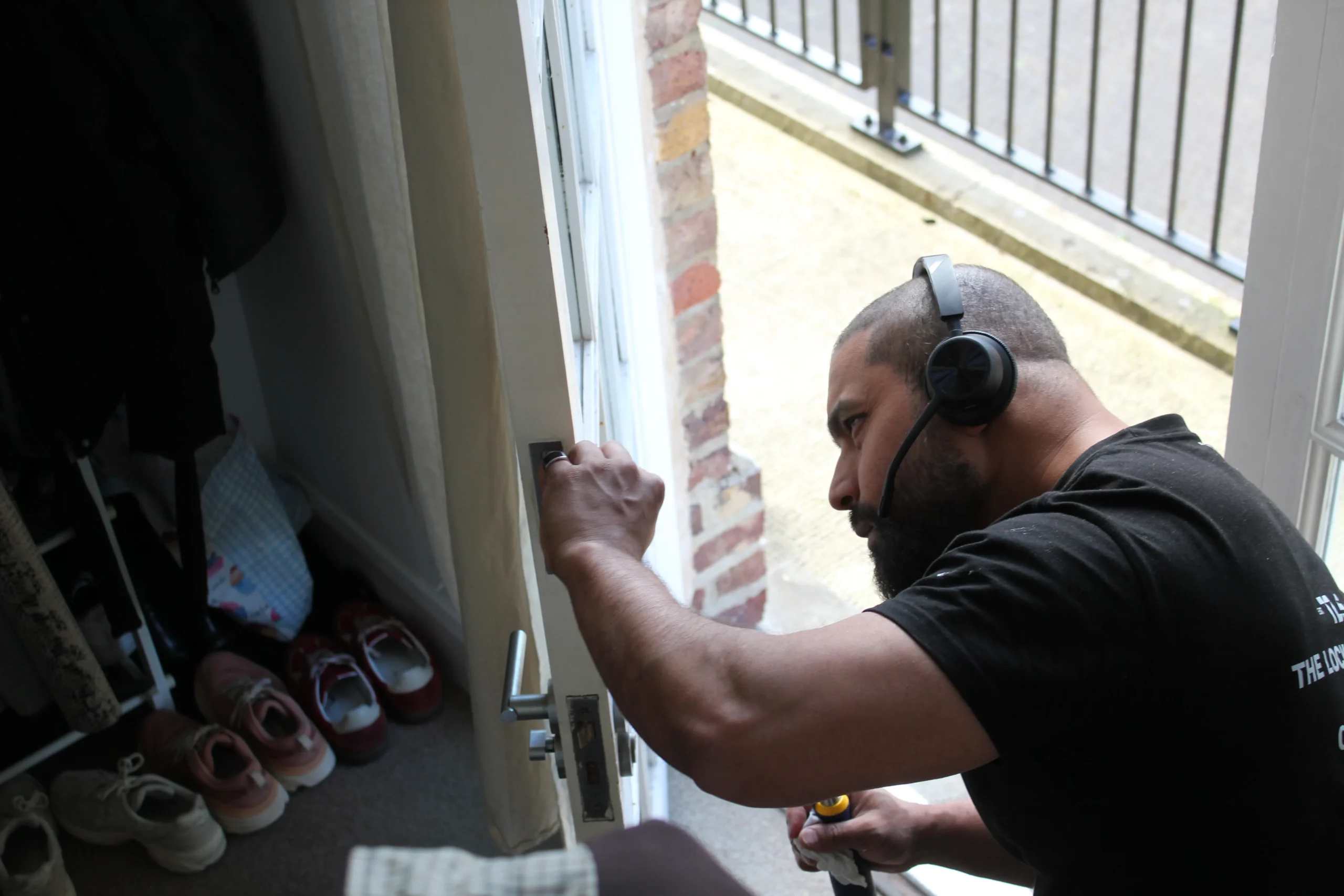
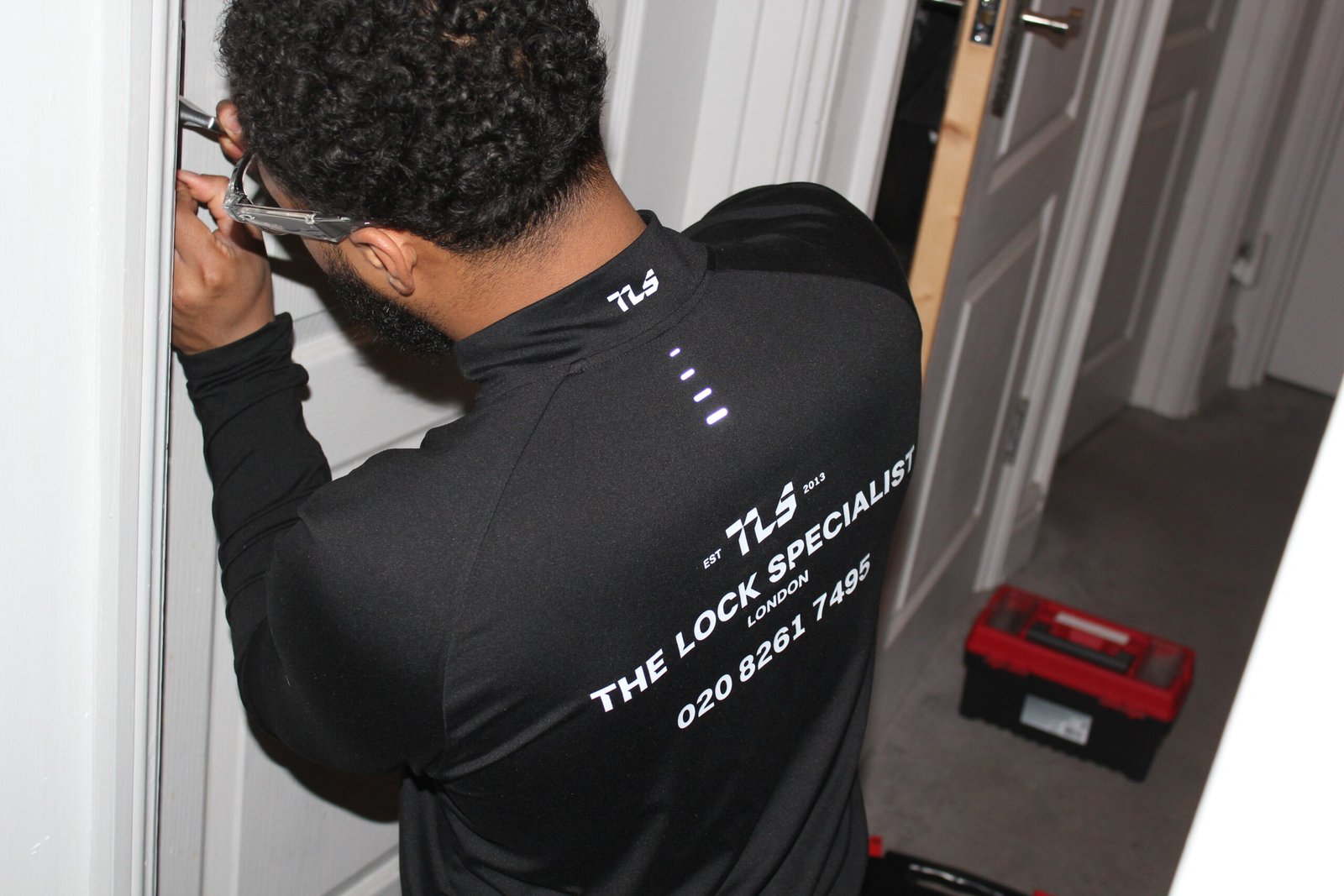
The Lock Specialist engineer opening a London front door without damage — replace with a real photo
Rated 5.0760+ Google reviews
No damageIn the vast majority of lockouts
30–60 minTypical London response
24/7/365Including bank holidays
Fixed priceAgreed before dispatch
Why choose us

Why Most Lockouts Cost Less Than People Expect

The fear is that being locked out means a broken door and a new lock. It very rarely does. Nothing has failed, so there is nothing to replace — the job is opening a working lock, and a working lock is exactly the kind that opens cleanly.

Call Now
  • Nothing is broken: your lock is functioning perfectly, which is what makes it straightforward to open
  • No parts, in most cases: a clean entry means no hardware to pay for, only the attendance
  • Picking before drilling: drilling is faster and bills higher, which is precisely why we do not start there
  • Honest arrival times: we tell you what the roads are doing so you can decide where to wait
  • Every door type: nightlatches, mortice locks, uPVC multi-points, communal entrances
  • Spare keys cut on site: so the same thing does not happen again next month
Every lockout situation

Lockouts We Attend Across London

Yale Nightlatch Lockouts — The Classic

The single most common call we take. A Yale-type nightlatch locks automatically when the door closes, which is convenient right up to the moment you step out to take a parcel, put out a bin, or answer the door in a dressing gown, and it clicks shut behind you.

It happens to organised people constantly, and it happens because the mechanism is designed to do exactly this. There is nothing to feel foolish about, and the engineer attending will have done four of them already that week.

The good news is that nightlatch lockouts are usually the quickest and cheapest job we do at any hour. The mechanism is a simple spring latch, and there are several well-established non-destructive methods for opening one depending on the door, the frame gap and whether a deadlocking function has been engaged. In most cases the door is open within minutes of the engineer arriving, and the lock is entirely untouched afterwards.

One thing worth knowing for next time: most nightlatches can be deadlocked from outside with the key, and many people never use that function. Deadlocking is more secure, because it stops the latch being slipped, but it also means the door cannot be opened from inside without a key — which matters for escape and is not appropriate on a final exit door in a flat. We will explain which arrangement suits your door while we are there, and if you would like a spare set cut before we leave, we can usually do that on site. The other thing worth checking is the snib — the small catch that holds the latch back — because using it while you step outside for thirty seconds removes this entire category of problem permanently and costs nothing at all.

  • Yale and nightlatch lockouts
  • Non-destructive entry, minutes on site
  • No parts needed in most cases
  • Deadlocking function explained
  • Spare keys cut before we leave
  • Attended 24 hours a day

A uPVC or composite door lockout is a different job from a nightlatch, because the mechanism is a multi-point system with hooks and bolts engaging along the whole edge of the door. When it is locked and you are outside without a key, there are several points holding rather than one.

This is also where forcing does the most damage, and where the temptation is greatest because uPVC doors feel less solid than timber. They are not. The hooks are steel and they engage into steel keeps in the frame. Shouldering a locked uPVC door does not open it — it bends the slab, distorts the frame, and frequently wrecks a gearbox that was working perfectly, turning an entry callout into a mechanism replacement and a frame repair.

Entry is normally achieved by manipulating the euro cylinder rather than attacking the mechanism, and in most cases the cylinder survives and stays in the door. Where a cylinder genuinely cannot be manipulated — usually because it is an older anti-pick model, already worn, or has been damaged in a previous attempt — we tell you before starting, quote the replacement, and fit an anti-snap cylinder on the same visit.

It is worth mentioning if your door had been sticking beforehand. A uPVC door that needed lifting or shoving before it would lock is a mechanism already under strain, and that changes what the engineer expects to find. Quite often a lockout is the moment a household discovers the gearbox was on its way out anyway, and dealing with both together in one visit is considerably cheaper than two. Composite doors behave the same way but drop faster, because the extra weight of the slab works on the hinges continuously, so a composite door that has begun binding at the top corner is worth adjusting before it becomes the reason you are standing outside.

  • uPVC and composite multi-point doors
  • Cylinder manipulation, mechanism left intact
  • Anti-snap replacement if one is needed
  • Existing gearbox faults identified
  • Hinge and alignment issues flagged
  • Patio and bi-folding doors covered

Keys locked inside is the version where you know exactly where they are, which is somehow more frustrating than having lost them. They are on the kitchen counter, three metres away, behind a door doing precisely what it was designed to do.

The important distinction is that this is purely an entry job. Nothing is broken and nothing needs replacing, so once we are inside the work is finished. There is no lock change, no hardware, and no follow-up — which is why it is worth resisting any suggestion that the lock needs replacing as part of getting you in.

A related version is keys left at work, at a partner’s flat, or in a coat somewhere across town. The practical question there is simply whether retrieving them is faster than us attending. If the keys are an hour away by tube and we can be with you in forty minutes, the callout is usually the better use of the evening, and we will give you a straight arrival estimate so you can make that call rather than guessing.

You will be asked to demonstrate that you are entitled to be there before we open anything. That is standard practice across the trade and it protects you as much as anyone — a locksmith who opens any door for anybody who asks is not one you want operating on your street. Post addressed to you, ID showing the address, or a phone call with a landlord, partner or housemate who can confirm it is normally enough, and our engineers handle it quickly and without making it awkward.

  • Keys locked inside the property
  • Entry only — no lock change needed
  • Honest arrival estimates so you can decide
  • Straightforward proof-of-entitlement process
  • Spare sets cut on site afterwards
  • Flats, houses and communal entrances

Communal Doors, Flats And Shared Entrances

Lockouts in blocks of flats have two doors in play, and it is worth being clear which one is the problem when you call. Being outside the communal front door is a different job from being outside your own flat door, and quite often people are outside both.

Communal entrances usually run on a single cylinder shared by every resident, and that changes the approach considerably. We will not replace a communal cylinder to resolve one resident’s lockout, because doing so locks out everyone else in the building. Entry is achieved non-destructively and the cylinder stays exactly as it was. Where a communal lock genuinely has failed, that becomes a conversation with the managing agent rather than a decision made on the doorstep at midnight.

Flat entrance doors have their own consideration, which is escape. A flat door on an internal escape route must open from inside without a key, which means a thumbturn or an internal release rather than a keyed deadlock. Older conversions across London frequently have this wrong, usually because a previous landlord fitted a mortice deadlock with good intentions. If we notice it while attending your lockout, we will mention it — it is the kind of thing that only matters once, and by then it matters enormously.

Student halls, HMOs and shared houses come with the added question of who can authorise entry. We can generally work with a housemate, a landlord or a managing agent on the phone where the occupant cannot produce documentation on the spot, and it is worth having that number to hand when you call so the engineer is not waiting outside with you while it gets sorted out.

  • Communal entrance lockouts
  • Cylinder retained, other residents unaffected
  • Flat entrance and HMO doors
  • Escape compliance flagged where wrong
  • Landlord and agent authorisation accepted
  • Student halls and shared houses

When Entry Cannot Be Non-Destructive

We open the large majority of lockouts without a mark, but it would be dishonest to promise it every time. A small number of locks genuinely cannot be manipulated, and being straight about that beforehand is better than discovering it on your doorstep.

The usual reasons are specific. High-security cylinders with anti-pick and anti-bump features are designed precisely to resist the techniques used for entry, and doing their job well is not a fault. A cylinder already worn out may have pins that no longer respond predictably. A lock that has been attacked previously, or that somebody has already attempted with a screwdriver, may have internal damage that makes manipulation impossible.

Where drilling is genuinely the only route, it is confined to the cylinder rather than the door. A drilled euro cylinder is destroyed and replaced, but the door, the handle and the multi-point mechanism are unaffected, and you end up with a new cylinder rather than a new door. We quote that outcome before starting, so the decision is yours rather than a surprise on the invoice.

What we will not do is start with the drill because it is quicker. This is the single most common complaint about the trade, and it exists because drilling takes minutes, guarantees entry, and bills for hardware on top. Our engineers attempt non-destructive methods first as a matter of policy, and if you are ever told by anybody that a standard nightlatch or a common euro cylinder must be drilled immediately, that is worth questioning. The one situation where we will move to drilling quickly without hesitation is where somebody vulnerable is inside, or where there is a genuine safety concern such as a running tap, something left on a hob, or a young child alone in the property. In that case getting the door open is the only thing that matters and the cylinder is an irrelevance.

  • Non-destructive methods attempted first
  • Honest assessment before starting
  • Drilling confined to the cylinder only
  • Replacement quoted before any drilling
  • Anti-snap cylinder fitted as replacement
  • Door and mechanism left unaffected

Getting Back In, And Not Repeating It

Once you are inside, five minutes of thought prevents the same evening happening again. Nearly everyone we let back in tells us they have done it before, and the fix is dull rather than difficult.

A spare with a person is the single most effective measure. Not under a mat, not in the meter box, not in the fake stone that looks like every other fake stone sold in Britain — every outdoor hiding place is a known one, and anyone doing this professionally checks all of them in under a minute. A neighbour, a family member nearby, or a colleague is a genuinely different proposition.

If a spare on the property is the only practical option, a keysafe is the sensible route, but specification matters. Police-approved to LPS 1175 rather than the cheapest unit available, mounted out of sight of the street, and the code changed whenever somebody who knew it no longer needs access. A visible keysafe by the front door with its original code is closer to an advertisement than a precaution.

The other habit is simply not letting the door close behind you. On a nightlatch, dropping the latch on the snib while you take a parcel or put a bin out removes the entire failure mode. And if your door has been sticking, needing a lift, or requiring a particular knack, deal with it as a booked repair now rather than as an emergency later — it is the same fault either way, at a very different price.

Smart locks and keypads are worth a mention here too, since a code cannot be left on a kitchen counter. They are not right for every door and the cylinder underneath still needs to be anti-snap rated, but for households that lock themselves out repeatedly they genuinely do solve the underlying problem rather than mitigating it.

  • Spare sets cut while we are on site
  • Police-approved keysafe supply and fitting
  • Advice on where spares should actually live
  • Nightlatch snib and deadlocking explained
  • Sticking doors identified for booked repair
  • Smart lock and keypad options discussed
Standing outside right now?

Call And We'll Give You A Real Arrival Time

Not a scripted reassurance — an actual estimate for your postcode, plus a fixed price before anyone sets off. Then you can decide whether to wait outside or somewhere warm.

Trusted by customers across London

Reviews From Lockout Callouts

Live from Google Business Profile
0Google reviews
5.0 average

746 of 760 Google reviews are 5-star.

View All Reviews On Google

Waited 10 hours for another locksmith who kept stalling — this team finished the job in under two hours and the engineer on site was excellent.

jstar London · Google Review, Aug 2026

Isa did a great job and was really friendly throughout.

Magnus Persson · Google Review, Aug 2026

Locked out overnight at a friend's house and panicking, reached out on WhatsApp — Mase talked him through it calmly within seconds.

Oliver Gyebi Oppong · Google Review, Aug 2026

Isa and apprentice Daniel fixed the lock quickly and stayed polite even after climbing several flights with the lift out of action.

Ann Wingate · Google Review, Aug 2026

New lock mechanism installed quickly, with real care taken over the property throughout.

Nick Menear · Google Review, Aug 2026

Needed a lock repair and found the whole service professional, friendly and completely stress-free.

Gillian Horsup · Google Review, Aug 2026
Where we cover

Lockout Callouts Across Islington And North London

Call Now

We attend lockouts right across the capital, day and night. These are the Islington, Haringey and North London areas our engineers reach most often.

While you are standing there

How To Avoid Being Overcharged On A Lockout

A lockout is the easiest job in the trade to overcharge, because nothing is broken, the work is often quick, and the customer is standing in the cold with no ability to compare prices. That combination is exactly what the low-quote-then-inflate model targets.

These five checks take under a minute and remove most of the risk. Ask them of us as readily as of anyone else.

1

Get a total before they set off

A competent locksmith can price a lockout from a description of the door. "From £49 plus parts" is not a quote, it is an opening position.

2

Ask whether they will drill

Ask directly whether non-destructive entry will be attempted first, and what a replacement cylinder would cost if it is not possible.

3

Ask who is attending

Many high-ranking numbers are call centres that pass the job on. The person quoting should be the company employing the person arriving.

4

Expect to prove entitlement

A locksmith who does not ask for any proof that you live there is a locksmith who would open your door for somebody else.

5

Refuse cash-only doorstep demands

Legitimate firms take card and issue an invoice. A cash-only demand with no paperwork, particularly at night, is the clearest warning sign there is.

The process

How A Lockout Callout Works

1

Tell us the door and the lock

Timber or uPVC? A latch that clicked shut, or was it locked with a key? Is anyone inside? That determines what the engineer brings.

2

Fixed price before dispatch

Covering entry, plus what a replacement would cost in the unlikely event the lock cannot be manipulated. Agreed before we move.

3

A real arrival estimate

Based on your postcode and what the roads are doing, so you can decide whether to wait outside or somewhere warmer.

4

Entry without damage

Picking and bypass methods appropriate to your lock. In the vast majority of cases the lock is untouched afterwards.

5

Prevention before we leave

Spare keys cut if you want them, and any sticking or failing hardware flagged so it does not become the next callout.

Door types

What Kind Of Lockout Are You Having?

These five cover almost every lockout in London. They sound similar on the phone and need quite different approaches, so knowing which you have helps us send the right engineer first time.

Nightlatch clicked shutThe classic. A spring latch, no key turned, nothing broken. Usually the quickest and cheapest entry we do.
Deadlocked with a keyThe door was locked deliberately and the key is elsewhere. More involved than a latch, still normally non-destructive.
uPVC multi-point lockedHooks and bolts engaged along the door edge. Entry via the cylinder — and never by forcing the slab.
Mortice deadlock on timberA five-lever lock in the door edge. Picking is slower but very achievable on a sound lock.
Communal entranceA shared cylinder serving the whole building. Opened without replacing it, so other residents are unaffected.

If you are not sure which you have, describe what happened and what the door looks like. That is usually enough for us to work it out on the phone.

While you wait

What To Do Before We Arrive

The wait is when avoidable damage happens, almost always out of a completely understandable urge to do something. None of this is complicated and all of it saves money.

  • Wait somewhere sheltered — a neighbour, a car, a cafe
  • Do not shoulder the door, particularly if it is uPVC
  • Do not try a window, and never one above ground level
  • Check whether a housemate or partner is closer than we are
  • Have post or ID showing the address ready if you can
  • Keep your phone charged so the engineer can reach you
Straight answers

Locked Out FAQs

Will you have to break my door to get me in?

Almost never. Being locked out means nothing has failed, and a working lock is exactly the kind that opens cleanly. We use picking and bypass methods, and in the vast majority of cases the lock is untouched afterwards.

How much does it cost to be let back in?

Less than most people expect, because a clean entry needs no parts — you are paying for attendance and skill, not hardware. We give you a fixed price on the phone before anyone is dispatched. Premium rates apply between 12am and 8am.

How quickly can you get to me?

Typically 30 to 60 minutes across London, depending on your area and traffic. We give an honest estimate for your postcode rather than a standard figure, so you can decide where to wait.

Do I have to prove I live there?

Yes, and you should want us to ask. Post addressed to you, ID showing the address, or a call with a landlord or housemate who can confirm is normally enough. A locksmith who never asks would open your door for anyone.

I am locked out of a flat in a block. Can you still help?

Yes. If it is the communal door, we open it without replacing the shared cylinder so other residents are unaffected. If it is your own flat door, that is a standard entry job.

What if my lock cannot be picked?

It happens occasionally, usually with high-security cylinders or locks already worn or damaged. In that case drilling is confined to the cylinder — the door and mechanism are unaffected — and we quote the replacement before starting, not afterwards.

Contact The Lock Specialist Ltd

Tell us your postcode, the door type and how it locked. We will give you a real arrival time and a fixed price before anyone sets off, 24 hours a day.

Phone020 8261 7495
Emailinfo@thelockspecialist.co.uk
Head OfficeSuite 1, Ideas House, 18 Eastwood Close, London, E18 1BY
Call Now
Scroll to Top