London Lock Problems Explained - Faults, Causes & Repairs | The Lock Specialist
Most lock problems announce themselves days or weeks before they strand anyone outside. A key that needs jiggling, a handle that has gone soft, a door that has to be shouldered shut. This page explains what those symptoms usually mean on London doors, and where the line sits between a repair and a replacement.
Start with the door, not the lock
London’s building stock changes street by street, and the door decides what can go wrong with it. An experienced locksmith identifies the door before the lock:
- Victorian and Edwardian terraces — timber doors with aged mortice locks, the original keep, and a frame that has shifted as the building settled. The lock is often fine; the alignment is not.
- Flat conversions — a communal entrance plus an individual flat door, which means two locking standards on one journey home and two separate failure points.
- Composite and uPVC doors — multi-point mechanisms where one handle drives hooks, rollers and a deadbolt together. When these go, the door still opens but stops locking cleanly.
- Retail and commercial units — high-security deadbolts, panic hardware, door closers and shutters, all cycling dozens of times a day rather than twice.
- Ex-local-authority blocks — frequently on a suited or restricted key system, where the communal cylinder is part of a larger scheme.
This is why the same symptom has different causes on different doors. A key that will not turn is a worn lever pack on a Victorian mortice, and a dropped hinge or a failing gearbox on a uPVC door. The fix is completely different.
Symptoms and what they usually mean
| What you notice | Usual cause | Repairable? |
|---|---|---|
| Key needs jiggling or lifting to turn | Door or frame has dropped out of alignment | Usually — adjustment, not replacement |
| Handle feels floppy or springy | Multi-point gearbox beginning to fail | Gearbox replaced, door kept |
| Door only locks if you lift the handle hard | Gearbox or hook wear, or a dropped sash | Often, if caught early |
| Barrel spins freely with no resistance | Cylinder cam or internal failure | Cylinder replaced |
| Latch does not catch when the door closes | Misaligned keep or worn latch bolt | Usually adjustment |
| Key turns but nothing happens | Broken cam or detached follower | Depends on the mechanism |
| Key snapped in the lock | Stiff mechanism forced, or a worn key blade | Extraction first, then fix the cause |
| Lock stiff in cold weather only | Contraction plus dry or wrong lubricant | Service and correct lubricant |
| Window will not lock or handle spins | Espagnolette gearbox or handle failure | Component replaced |
| Draught appeared and door feels loose | Hinge drop or compression loss | Adjustment and hinge work |
One pattern worth knowing: a key that has been getting harder to turn for weeks is the lock warning you. Keys snap because someone applied more force to a mechanism that was already failing — so extraction alone is never the whole job.
The locks on London doors
Mortice locks
Lever-based, set into the edge of a timber door. Common across older London property. Wear shows up as a key that needs a specific angle to work.
Euro cylinders
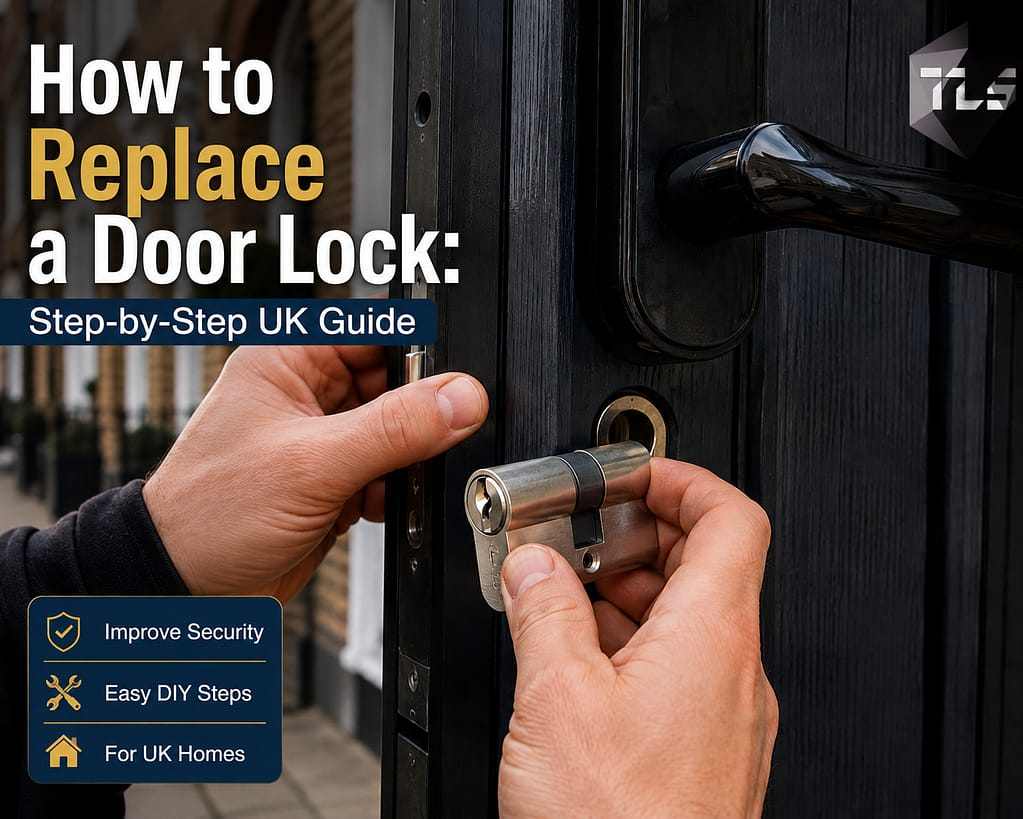
The barrel in a uPVC or composite door. Fails by spinning, seizing, or snapping under force. Sizing matters — a protruding barrel is a grip point.
Multi-point mechanisms
The full strip down the door edge. The gearbox is the part that fails, and it fails gradually — the handle tells you first.
Nightlatches and rim locks
Mounted on the face of the door, latching behind you. Deadlocking versions stop the latch being slipped from outside with a card.
Window locks
Espagnolette gearboxes, handles, hinges and friction stays. Routinely ignored, and frequently the actual entry point in a ground-floor break-in.
Smart and keyless locks
Keypad, fingerprint or app-controlled. Fine where a mechanical key override is retained, so a dead battery is an annoyance rather than a lockout.
uPVC and patio doors: the most common London callout
If your door is uPVC or composite, the mechanism inside it is doing more work than the cylinder. Lifting the handle throws hooks, rollers and a deadbolt simultaneously through a single gearbox — and that gearbox carries the whole load every time the door is locked.
The failure sequence is almost always the same:
- The handle needs a firm lift. Easy to dismiss as the door being stiff.
- It starts needing a shove as well. Wear has begun, and force is now compensating for it.
- The handle goes floppy or springy. A spring or cam inside the gearbox has broken.
- The door will not lock at all — or will not unlock. If it seizes while locked, the door has to be opened before anything can be repaired.
Caught at stage one or two, this is a gearbox replacement and the door, frame and glass are untouched. Left to stage four it becomes an emergency. Our engineers carry common gearboxes, hooks and strips so most of these are finished in one visit — see lock repair.
Lock snapping and anti-snap cylinders
Snapping is one of the most common methods of forced entry on uPVC and composite doors. The barrel is gripped, twisted until it fractures, and the mechanism is then operated directly. It is quick and quiet, which is exactly why it is used.
Two things decide how exposed you are. Sizing — a cylinder protruding more than a couple of millimetres past the handle plate gives something to grip. And rating — a 3-star anti-snap cylinder is built with a sacrificial break point so the front section shears away while the working part stays locked in place.
Worth checking on your own door right now: look at the barrel from the outside. If it stands proud of the handle plate, it is worth measuring and correcting.
Snapped and broken keys
When a key shears off, the blade stays inside the cylinder. Extraction tools draw it out, and in most cases the lock is undamaged and keeps working. What matters is the second half of the job: finding out why it snapped. A healthy lock does not break a key.
Common causes are a mechanism that had become stiff, a worn key copied too many times from a copy, or a door out of alignment forcing the key to take load it was never meant to carry. Extract without diagnosing and the next key snaps too.
Repair or replace?
- Repair when the body of the lock is sound and the fault is a single component — a gearbox, a spring, a handle, a misaligned keep.
- Repair when the real problem is the door rather than the lock. Replacing a cylinder will not fix a dropped hinge.
- Replace when a cylinder has been snapped, drilled or otherwise compromised — its security is gone even if it still turns.
- Replace when keys are unaccounted for and anything on the keyring could identify the address.
- Replace when what is fitted falls short of the standard your door needs, typically BS3621 on a final exit door.
- Replace when a mortice lock’s levers are worn enough that the key only works at one specific angle. That is the lock’s last warning.
Services for these faults
- Lock repair — stiff keys, spinning barrels, failed gearboxes, latches that will not catch
- Lock installation — new and additional locks fitted and aligned
- Emergency lock repairs — break-in damage secured the same night
- Locked out — non-destructive entry when the mechanism has seized
- Security grilles — shopfronts, basements and ground-floor flats
- CCTV installation — cameras placed around the entry points that get used
Know what is wrong but not who to trust with it? How to choose a locksmith in London covers what to check before you call, what to ask on the phone, and what your insurer is likely to require.
Common questions
My uPVC door only locks if I lift the handle hard. What is wrong?
That is a multi-point gearbox beginning to fail, not a cylinder fault. It is worth addressing early — once the gearbox seizes completely the door can lock shut with you on the wrong side of it, which turns a planned repair into an emergency.
Why does my key need jiggling to turn?
Usually the door or frame has dropped slightly, so the bolt is no longer meeting the keep squarely and the key is taking the strain. On a timber door it can also be worn levers inside a mortice lock. Both are diagnosed by feel on site.
My barrel spins round and round. Can it be repaired?
No — a freely spinning cylinder means an internal cam or connection has failed, and the cylinder is replaced. The rest of the mechanism is usually unaffected.
A key snapped in my lock. Is the lock ruined?
Usually not. The blade is drawn out with extraction tools and the lock often keeps working. The important part is finding out why it snapped, because a healthy lock does not break a key — something was stiff, worn or misaligned first.
What is an anti-snap lock and do I need one?
Lock snapping is a common forced-entry method on uPVC and composite doors. A 3-star anti-snap cylinder has a sacrificial break point, so the front shears away while the working section stays locked. If your barrel stands proud of the handle plate by more than a couple of millimetres, it is worth upgrading.
Why is my lock stiff only in cold weather?
Metal contracts and tolerances tighten, and any dryness or wrong lubricant inside the mechanism shows up immediately. It is a warning rather than a fault — a service and the correct lubricant usually resolves it before it becomes a snapped key.
Can a lock be repaired instead of replaced?
Often, yes. If the body of the lock is sound and the fault is one component — a gearbox, spring, handle or misaligned keep — it is repaired. Replacement is for cylinders that have been snapped or drilled, worn-out mortice locks, and anything short of the standard the door needs.
My window will not lock properly. Is that a locksmith job?
Yes. Espagnolette gearboxes, handles, hinges and friction stays are all locksmith work, and they matter more than people expect — windows are frequently the actual entry point in a ground-floor break-in.
Do smart locks fail differently from normal locks?
They add battery and electronics as failure points on top of the mechanical ones, which is why the mechanical key override should always be retained. With the override in place a flat battery is an inconvenience instead of a lockout.
How long does a typical lock repair take?
Most single-component repairs — a gearbox, a cylinder, a handle, an alignment adjustment — are completed in one visit, because common parts are carried in the van. Anything unusual is identified during the free survey so you know before work starts.