
Lost Or Snapped Keys? Here's What Actually Happens Next.
Keys fail in four ways: you lose them, they snap in the lock, they break in your hand, or they end up on the wrong side of a closed door. Each needs a different fix, and only one of them usually means changing the lock. We will tell you which you are dealing with before we quote.
Extraction without damage wherever possible. New lock only if you actually need one.
- Snapped key extraction, usually without a new lock
- Same-day lock changes after lost keys
- Non-destructive entry when keys are inside
- Honest advice on whether a change is needed
Why Key Problems Are Worth Getting Diagnosed Properly
Almost every key failure has a cause sitting behind it, and the cause is usually the lock rather than the key. Fix the key problem without looking at the lock and you will be making the same call again within months.
Call Now- We extract before we replace: a snapped key rarely means a new lock, and we will not sell you one you do not need
- We find the cause: keys snap because cylinders wear or doors drop, and we check both
- Honest lock-change advice: if your keys are simply lost somewhere in the house, we will say so
- Security assessed after loss: whether your keys can be linked to your address changes the answer entirely
- Fixed price before dispatch: including whether replacement hardware is likely to be needed
- Stocked vans: cylinders and mortice locks on board if a change is genuinely required
Key Problems We Solve Across London
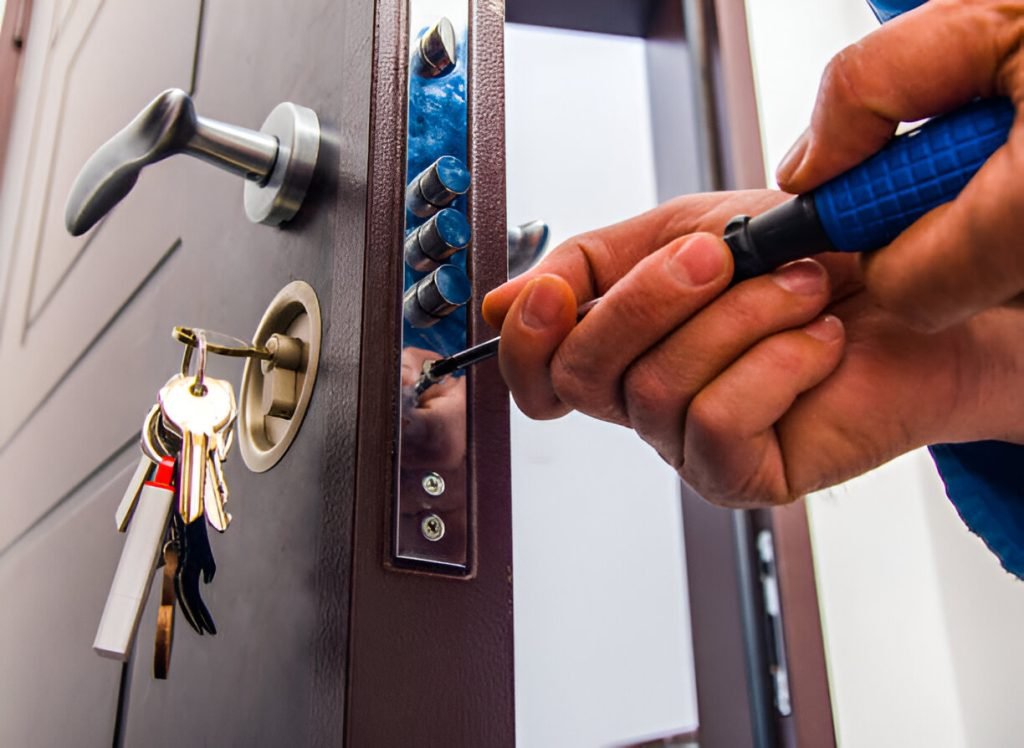
A key that snaps in the lock almost never does it without warning. It bends slightly for weeks, needs a particular angle, gets stiff in cold weather, and then shears off on an ordinary morning. Once part of the blade is inside, the mechanism is jammed part-way through its travel and the door is neither properly locked nor openable.
The most important advice is what not to do. Pliers push the fragment deeper and score the pin chamber. Superglue on a matchstick bonds the fragment to the cylinder and turns a ten-minute extraction into a guaranteed replacement. Drilling it yourself destroys a lock that was very likely salvageable. Every one of these is understandable at the time, and every one of them adds cost.
Proper extraction uses purpose-made tools that hook the fragment and draw it out along the keyway, and in most cases the cylinder survives completely intact. Where the break is deep, or where a previous attempt has jammed it further, extraction takes longer but is still usually possible. It genuinely is worth calling before trying anything, because the difference in cost between the two outcomes is substantial.
The part that matters afterwards is why it happened. Keys shear because they have been fighting something — a worn cylinder whose pins no longer line up cleanly, or a door that has dropped so the bolt catches its keep and needs force to turn. We check both before leaving. If the cylinder is worn out, we will tell you and quote a replacement; if the door needs adjusting, we will adjust it. Extracting the key and leaving the cause in place simply schedules your next snapped key.
- Snapped key extraction from euro cylinders
- Mortice and nightlatch key extraction
- Cylinder usually saved, not replaced
- Cause diagnosed — wear or door alignment
- Anti-snap replacement if the lock has failed
- Attended 24 hours a day
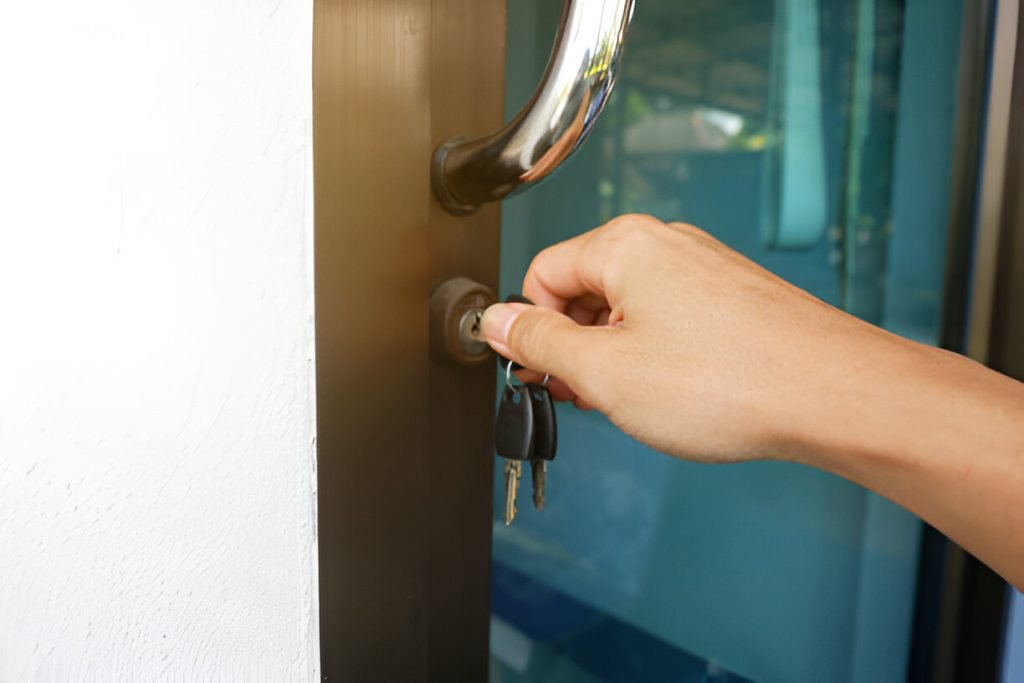
A broken key that came apart in your hand rather than in the lock is a slightly different problem, and often a more useful one, because you still have both halves and the lock is not jammed. It is also a clear warning: that key was at the end of its life, and any copies cut from it recently will be carrying the same weakness.
Keys wear invisibly. Every use abrades the cuts slightly, and after years the profile no longer matches the pin heights it was made for. The lock compensates for a while, then starts needing a jiggle, then needs a particular lift or angle. That is the point at which people start describing the lock as having a knack — and a key doing extra mechanical work to overcome a poor match is a key building toward a break.
The common mistake is cutting a new key from the worn one. A copy taken from a degraded key reproduces the degradation and sometimes amplifies it, which is why a fresh copy can work worse than the original. Where an original or a code exists, cutting from that gives a correct key. Where it does not, and the cylinder is worn to match, replacing the cylinder and starting again is often the more sensible answer.
Bent keys deserve a mention because straightening them is such a natural instinct. A key that has been bent and straightened has been work-hardened at the bend, and that point is now brittle and considerably more likely to shear — usually inside the lock, where it becomes a much larger problem. A bent key should be replaced rather than corrected.
- Broken key replacement cut correctly
- Worn key and cylinder assessment
- Keys cut from original or code, not a worn copy
- Bent key advice — replace rather than straighten
- Cylinder replacement where wear is matched
- Spare sets cut while on site
Lost Keys — Deciding Whether To Change The Lock
Losing keys raises one question that actually matters: can whoever finds them work out where they fit? That single answer determines everything else, and it is worth thinking through calmly rather than deciding in the first ten minutes.
If your keys were on a ring with an address fob, a parcel label, a work pass, or anything identifying, treat the property as compromised and change the locks. The same applies if they went missing close to home, or if they disappeared with a wallet or bag containing your address. In those cases the lock change is not paranoia, it is proportionate, and it should happen the same day rather than at the weekend.
If they vanished on holiday two hundred miles away with nothing identifying attached, the realistic risk is very low. Most lost keys are genuinely lost rather than taken, and the finder has no way of matching them to a door. We will say this plainly rather than talking you into work you do not need — we would rather cut you a replacement set and be called again next year than sell an unnecessary lock change today.
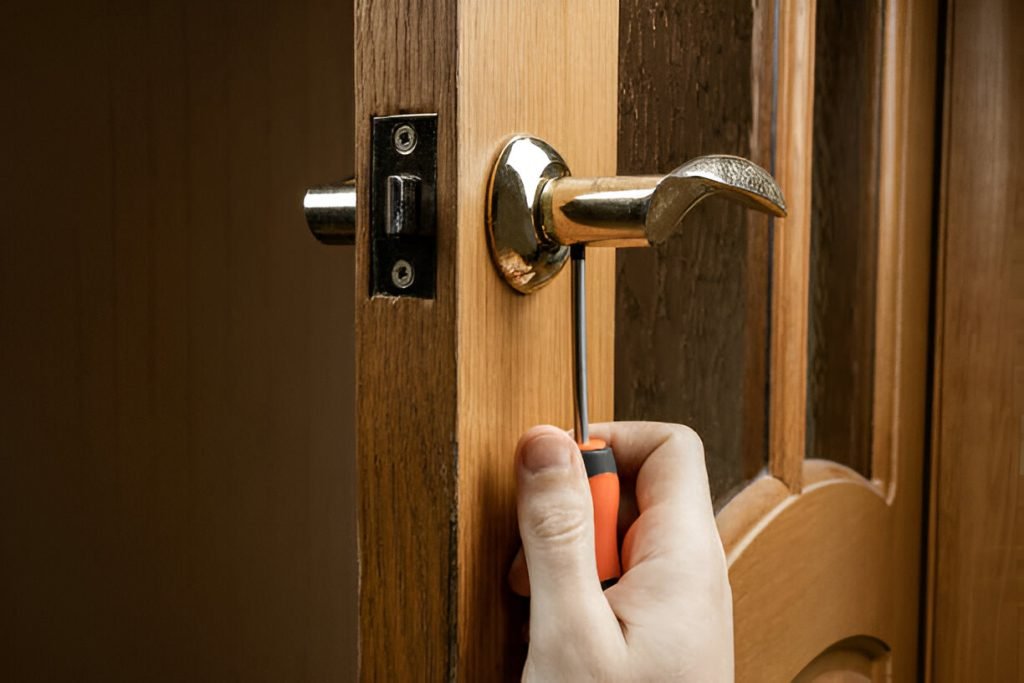
Where a change is warranted, it is usually only the cylinder that needs replacing on a uPVC or composite door, which keeps cost and disruption low. Every external door should be done together, including the back door and any side gate, and it is worth keying them alike so the household carries one key rather than four. On timber doors the mortice lock body is changed, and we fit to BS3621 so your insurance position is not quietly weakened in the process.
- Same-day lock change after key loss
- Honest assessment of actual risk
- Cylinder-only change where appropriate
- All external doors done together
- Keyed-alike sets to reduce key count
- BS3621 hardware on timber doors
Keys locked inside is the most common key call we take and the least serious, because nothing is actually broken. Your keys are safe, your lock is fine, and the only problem is which side of the door you are standing on. It is also the situation where panic costs the most money, because the lock is in perfect working order right up until somebody forces the door.
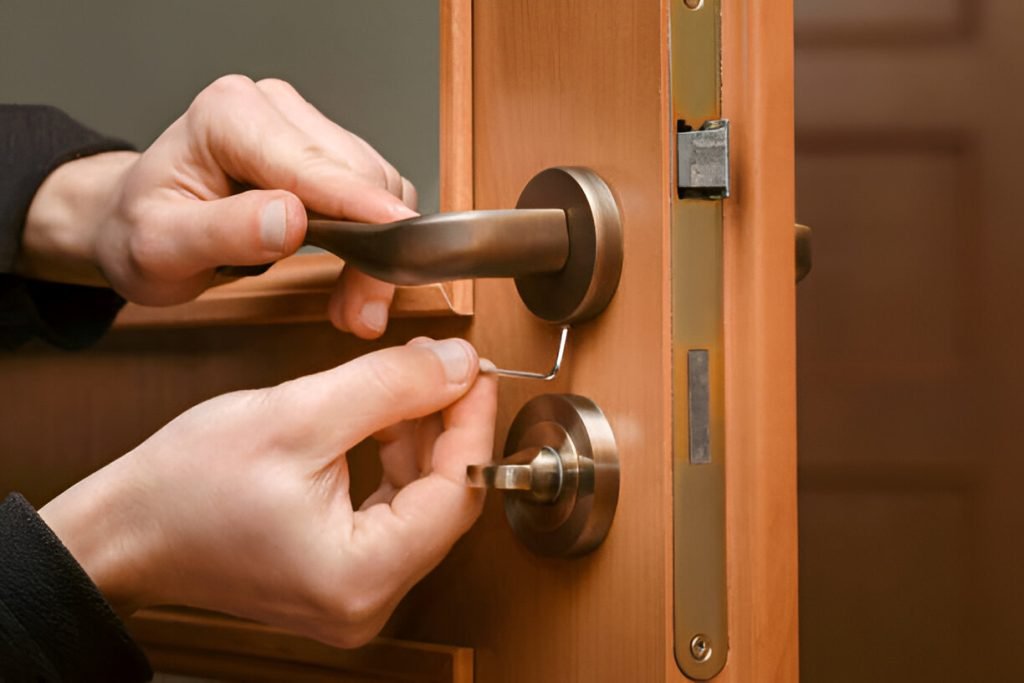
On a nightlatch this happens simply by pulling the door shut. On a uPVC door it usually means the door was locked with the key from outside and the keys were then put down inside, or a second person left later. Either way, the fix is entry rather than repair, and in the vast majority of cases entry is achieved without damage using picking or bypass techniques appropriate to the lock.
The instinct to try a window first is worth resisting. Ground-floor windows in London are frequently restricted, and a window forced open or a pane broken costs several times an entry callout and leaves the property less secure until it is repaired. Climbing in through anything above ground level is a genuinely bad idea, and we would much rather attend than have somebody attempt it.
You will be asked to demonstrate you are entitled to be there. That is not obstruction, it is basic practice, and it exists to protect you as much as anyone — a locksmith who lets anybody into any property on request is not one you want operating in your area. Post, ID showing the address, or a phone call with someone who can confirm it is normally sufficient, and our engineers are used to handling it quickly and without making it awkward.
- Non-destructive entry as the default
- Nightlatch and uPVC door lockouts
- No repair needed — nothing is broken
- Attended 24 hours a day
- Straightforward proof-of-entitlement process
- Spare keys cut while on site
Work, Communal & Shared Key Loss
A lost key at work is a different calculation from a lost key at home, because you are deciding on behalf of other people. A missing office key, a communal entrance key, or a stockroom key affects everyone in the building, and the person who lost it is rarely the person who bears the consequence.
The awkward part is that nobody knows how many copies exist. On a standard key profile, any keyholder can have a copy cut at a kiosk for a few pounds without telling anybody. Over years of staff turnover in an office, or decades of tenancy changes in a block, the number of keys in circulation drifts well beyond any list anybody is keeping. When one goes missing, you are not losing one key from a known set — you are losing one from an unknown one.
This is exactly the problem restricted key profiles solve. Blanks are controlled and cut only against your written authorisation, so every key in existence is one you approved. It costs slightly more per key and it converts a lost key from a lock-change decision into an administrative note. For communal entrances in blocks of flats, it is generally the single most useful security change a managing agent can make.
Where a key is lost on a standard profile and the risk is real, changing the cylinder on the affected door is the honest answer. For suited or master-keyed systems this is more involved, because the new cylinder has to be cut into the existing hierarchy correctly, and we would rather do that properly than compromise the whole system for one door.
- Office and communal key loss handled
- Restricted profiles to control copying
- Cylinder changes within suited systems
- Managing agent and landlord accounts
- Key schedules kept on record
- Written record of what was changed
Spare Keys, Key Control & Avoiding The Next Call
Almost every call on this page could have been avoided by a spare key existing somewhere sensible. It is the least interesting advice in locksmithing and by some distance the most effective, and the reason people do not act on it is simply that the moment it matters is the moment it is too late to arrange.
Somewhere sensible means with a person, not in a place. Every outdoor hiding spot is a known one — under the mat, in the meter box, beneath the third plant pot, inside the fake stone that looks like every other fake stone sold in Britain. Anyone who does this professionally checks all of them in under a minute. A neighbour you trust, a family member nearby, or a keysafe fitted where it is not visible from the street are all genuinely better.
If you use a keysafe, the details matter. It should be police-approved to LPS 1175 rather than the cheapest unit available, positioned out of sight of the street, and its code should be changed whenever anyone who knew it no longer needs access. A visible keysafe on a front wall with a code that has not changed since it was fitted is an advertisement rather than a precaution.
The other habit worth building is acting on early warnings. A key that has started needing a wiggle, a lock that is stiff in the cold, a door that needs lifting — these are all mechanical faults announcing themselves in advance. Addressed as planned work they are inexpensive. Addressed at the point of failure they are an out-of-hours callout, usually in the rain.
- Spare sets cut while we are on site
- Police-approved keysafe supply and fitting
- Advice on where spares should actually live
- Restricted keys so copies stay controlled
- Early-warning faults diagnosed cheaply
- Cylinder condition checked on any visit
Before You Try Pliers Or A Window — Call Us
Almost every expensive key job we attend started as a cheap one that somebody tried to fix first. If the key is snapped, jammed or on the wrong side of the door, stop and call. We will quote a fixed price before setting off.
Real Key Callouts, Real Reviews
746 of 760 Google reviews are 5-star.
View All Reviews On GoogleWaited 10 hours for another locksmith who kept stalling — this team finished the job in under two hours and the engineer on site was excellent.
Isa did a great job and was really friendly throughout.
Locked out overnight at a friend's house and panicking, reached out on WhatsApp — Mase talked him through it calmly within seconds.
Isa and apprentice Daniel fixed the lock quickly and stayed polite even after climbing several flights with the lift out of action.
New lock mechanism installed quickly, with real care taken over the property throughout.
Needed a lock repair and found the whole service professional, friendly and completely stress-free.
A jammed balcony door lock was fixed skilfully and quickly by Mac — overall a good, smooth service.
Great team, great work — would definitely recommend this company.
Locked out on a Sunday evening, Mac solved the problem and reinstalled the lock after an issue with the door itself — patient throughout.
Excellent service from Mac — arrived within 30 minutes and the job itself took about five.
Jesus was kind and professional, opened the door and left everything in full working order.
John let him in with no damage to the lock at all, keeping things calm and stress-free.
Isa explained the new lock mechanism clearly and made sure it opened and closed properly before leaving.
Described the team as miracle workers in a stressful situation, handled quickly and efficiently.
A jammed top lock from a broken key was reported at 4pm — an engineer arrived within the hour and checked the second lock too.
Mase persevered with a poor previous installation and took the time to get it right, with great communication throughout.
Isa and the team sorted the problem in a timely, professional manner — highly recommended.
Mace and Eser worked patiently through a complicated old-house lock replacement, keeping communication clear from start to finish.
Mase and Isa fitted the lock perfectly within an hour of the call, and everything was left spotless.
After being overcharged by another locksmith, this team helped sort it out and gave honest advice for the future.
An exceptional, professional locksmith who explained everything clearly and saved the day.
Isa was extremely professional and did an amazing job — prompt, reliable and genuinely available around the clock.
Mase and Isaac were kind and efficient throughout the job — great service from start to finish.
Communication was clear throughout and the work itself was completed quickly and well.
Key Callouts Across London
We attend key extraction, lock change and lockout calls right across London. These are the areas our engineers cover most often for key-related work.
Five Mistakes That Turn A Cheap Key Job Expensive
Every one of these is a thing we have arrived to find, and every one of them was done by a sensible person trying to help themselves. The instinct to fix it yourself is completely reasonable — it just happens to be wrong on locks specifically.
If you have already tried one of these, say so when you call. It changes what we bring, and there is nothing to be embarrassed about.
Pliers on a snapped key
Gripping the visible stub pushes the fragment deeper and scores the pin chamber. A ten-minute extraction becomes a cylinder replacement.
Superglue on a matchstick
It bonds the fragment to the inside of the cylinder rather than to itself. This guarantees a replacement lock, every time.
Drilling it out yourself
Drilling destroys a cylinder that was very likely recoverable, and a drill that wanders damages the door itself as well.
Forcing a uPVC door
Forcing a door with a jammed multi-point mechanism bends the frame and wrecks a gearbox. The repair is many times the entry cost.
Cutting a copy from a worn key
A copy reproduces the wear and sometimes worsens it. Cut from the original or the code, or replace the cylinder and start clean.
How A Key Callout Works With Us
You describe the key and the door
Snapped, lost, or inside? Timber or uPVC? Is part of the key visible? These answers determine the tools we send.
We quote a fixed price
Including whether a replacement cylinder is likely. If extraction turns out to be enough, you pay the lower figure.
An engineer is dispatched
With extraction tools and common cylinders on board, so most jobs finish on the first visit.
Extraction or entry first
We recover the key or open the door without damage wherever possible, before considering any replacement.
We check why it happened
Cylinder wear and door alignment are assessed, so the same failure is not simply scheduled to happen again.
Five Key Problems And What Each One Actually Needs
These four situations get described on the phone in almost identical language, but they need different tools and produce very different bills. Knowing which one you have helps us send the right engineer.
Tell us which of these you have when you call and we will send the right tools first time, with a fixed price agreed before anyone sets off.
How To Not Need This Page Twice
Key failures give plenty of warning and are cheap to prevent. These are the habits that keep people from making this call a second time.
- Replace a key that has started to bend, before it shears
- Leave a spare with a person, never in an outdoor hiding place
- Cut copies from the original key or its code, never from a worn one
- Treat a stiff lock as a fault, not a quirk to work around
- Fix a uPVC door that needs lifting before the gearbox seizes
- Take identifying fobs and address labels off your keyring
Lost & Snapped Key FAQs
My key snapped in the lock. Will I need a whole new lock?
Usually not. In most cases the fragment can be extracted with the cylinder left intact. A replacement is normally only needed if the lock was already worn out, or if a previous extraction attempt has damaged it.
Can I pull the broken piece out myself with pliers?
We would strongly advise against it. Pliers grip the stub and tend to push the fragment deeper while scoring the pin chamber, which turns a quick extraction into a guaranteed cylinder replacement.
I have lost my keys. Do I definitely need the locks changed?
It depends on whether they can be linked to your address. If they carried an address fob, a work pass or went missing near home, change them the same day. If they vanished far away with nothing identifying, the realistic risk is low and a replacement set may be all you need.
How much does it cost to change locks after losing keys?
It depends on your door type and how many doors need doing — a euro cylinder swap on a uPVC door is considerably cheaper than a mortice lock on timber. We give you a fixed price on the phone before anyone is dispatched.
My keys are locked inside. Will you have to break the door?
Almost never. Keys locked inside means nothing is broken, and entry is normally achieved without damage using picking or bypass techniques. You will be asked to show you are entitled to be there, which is standard practice.
Why does my key keep sticking before it snaps?
Because something is fighting it — usually a worn cylinder whose pins no longer line up, or a door that has dropped so the bolt catches its keep. That resistance is what eventually shears the key, so it is worth fixing while it is still just annoying.
Contact The Lock Specialist Ltd
Tell us whether the key is snapped, lost, broken or inside, and what the door is made of. We will quote a fixed price before anyone sets off, 24 hours a day.